Gafsure: A Modern Serif Font for Striking Brand Identities
I opened a blank brand board on my screen, the cursor blinking in the center of an empty canvas. The client wanted a boutique skincare line that felt both heritage-rich and undeniably contemporary. It is a common brief, but one that often leads to generic results if you aren't careful with your typeface choices. I reached for Gafsure, a striking display serif that has been sitting in my library for months, waiting for a project where its personality could truly shine.
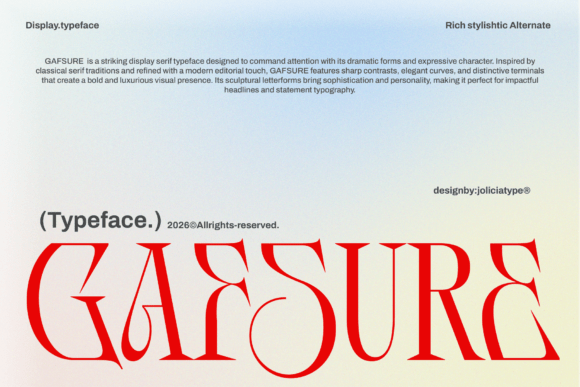
The moment I typed out the brand name in Gafsure, the mood shifted instantly. This isn't just another decorative font; it is a masterclass in visual balance. Inspired by the timeless foundations of classical serifs but reimagined through a sharp, modern lens, Gafsure offers a unique blend of elegance and edge. As I began testing it across various design assets, from logo drafts to packaging mockups, I realized this premium font was exactly what the identity needed to stand out without screaming for attention.
First Impressions: Where Elegance Meets Edge
Gafsure is clearly designed as a display font, meaning it commands attention in headlines and short phrases rather than long blocks of text. When I placed it on a digital business card mockup, the contrast between the thick, confident strokes and the delicate, sharp serifs created an immediate sense of sophistication. It feels like a high-end fashion magazine cover or a luxury perfume label.
The character shapes are distinct. Unlike some modern serifs that lean too heavily into geometric minimalism, Gafsure retains organic curves that give it warmth. However, the terminals are cut at sharp angles, preventing the font from feeling old-fashioned or stuffy. This duality makes it incredibly versatile for brand identity work. Whether you are designing for a creative studio, a craft bakery, or a local restaurant, Gafsure can anchor your visual system with a touch of refined authority.
I tested the font weights to see how they held up under pressure. The heavier weights provided excellent legibility for large signage concepts, while the lighter variants offered a graceful touch for subheadings. In a real-world scenario, this flexibility allows designers to establish a clear visual hierarchy without needing to switch type families constantly.
Real-World Testing: From Logo to Packaging
To truly understand the capabilities of Gafsure, I moved beyond the screen and simulated a full branding rollout. First, I tackled the logo design. Using the font as the primary logotype, I found that the letterforms had enough character to be memorable even when scaled down. The open counters (the enclosed spaces within letters like 'e' or 'a') remained clear, ensuring the logo wouldn't look muddy on small applications like social media avatars.
Next, I applied Gafsure to a product label concept. Imagine a jar of artisanal honey or a bottle of cold-pressed oil. The font's sharp serifs mimicked the clean lines of glass and the precision of modern manufacturing, while its classic roots suggested natural ingredients and traditional methods. It bridged the gap between "handmade" and "high-tech" perfectly. On a packaging design mockup, the typography looked crisp against a matte finish, proving that Gafsure works well in print environments where detail matters.
I also experimented with web design elements. Placing Gafsure in the hero section of a homepage created an instant focal point. It paired beautifully with a clean sans-serif body text, creating a dynamic contrast that guided the user's eye naturally. For social media graphics, the font made simple quote cards and promotional posts look polished and professional, elevating the perceived value of the content.
When to Use (and When to Avoid) Gafsure
While Gafsure is a powerful tool, no single serif font is a universal solution. Its strength lies in its display capabilities. If you are looking for a body text font for a 50-page ebook or a dense legal document, Gafsure is not the right choice. At small sizes, its sharp details might become difficult to read, and its decorative nature could distract readers from the content itself.
Similarly, if your brand requires a strictly formal, corporate, or bureaucratic tone, Gafsure might feel too stylized. It carries a creative, artistic energy that fits best with brands that want to express personality, craftsmanship, or modernity. It is less suitable for government websites or financial institutions where understated neutrality is preferred.
However, for editorial design, posters, flyers, and event invitations, Gafsure is exceptional. It excels at setting a mood. Whether you need a font that whispers luxury or shouts creativity, Gafsure delivers. Just remember to use it sparingly. Let it be the star of the show in headlines and logos, rather than trying to force it into every corner of your layout.
Building a Complete Typography System
One of the most valuable aspects of using Gafsure is how easily it pairs with other typefaces. Because it is so distinctive, it needs a partner that lets it breathe. I found that pairing it with a neutral, humanist sans serif font creates a perfect balance. The sans-serif handles the informational heavy lifting with clarity, while Gafsure adds the emotional hook.
If you prefer a more cohesive look, you could pair it with a subtle script font for signatures or accents, though you must ensure the script doesn't compete with Gafsure's sharp geometry. For a bold, modern aesthetic, combining Gafsure with a geometric sans-serif can create a striking, almost editorial vibe. The key is to maintain contrast; don't pair two display fonts together, as it will quickly become visually chaotic.
Before finalizing any client work, I always recommend testing the font in its actual context. Check the included styles, alternates, and ligatures to see if they enhance your specific design needs. Verify multilingual support if your brand operates globally, and ensure you have access to webfont formats if you plan to use it online. Gafsure comes with a robust set of features that reward exploration, but only if you take the time to dig in.
Final Practical Considerations
As a designer who values both aesthetics and practicality, I appreciate that Gafsure is ready for commercial use. However, a crucial step in any professional workflow is reviewing the commercial font licensing agreement. Ensure you understand the scope of usage, whether it covers print-on-demand products, merchandise, digital templates, or client deliverables. Clear licensing protects both you and your clients, allowing you to focus on creativity without legal worries.
In conclusion, Gafsure is more than just a pretty face for your designs. It is a functional, expressive tool that can elevate a brand's visual language significantly. By testing it on real projects—from a café refresh to a creative studio identity—you can discover its true potential. It strikes a rare balance between classical tradition and modern锐利 (sharpness), making it a worthy addition to any designer's toolkit. If you are looking to infuse your next project with a sense of timeless yet contemporary style, Gafsure is definitely worth a try.